
NBA Home Court Advantage and Prop Betting Impact
 Available in US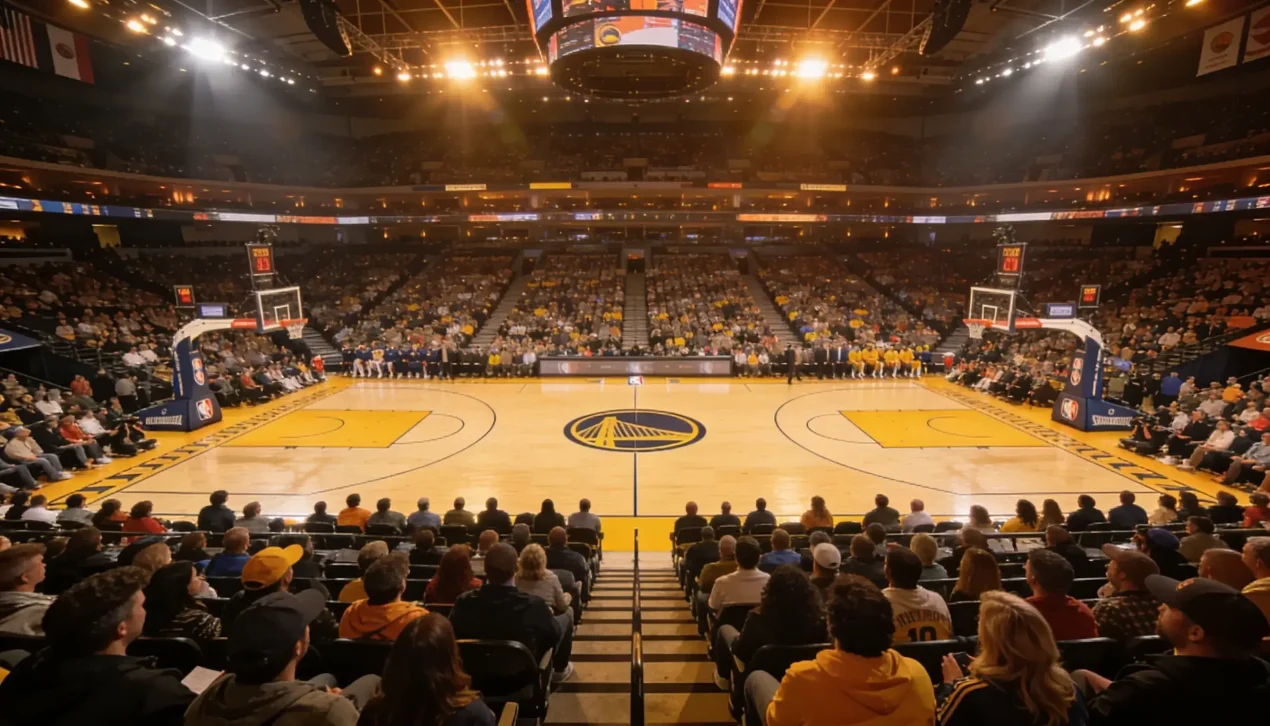
Home Court Edge in Props: Exploiting Spreads That Bookmakers Often Overlook
Every punter who bets the NBA spread knows about home court advantage. The standard adjustment is roughly 2-3 points on the spread, baked in by default at every bookmaker in the world. But ask the same punter whether home court advantage is priced into the player props they bet, and you get a blank stare. The truth is that home court advantage exists in player props too — academic research confirms that home teams score approximately 5% more than visitors — but the adjustment in prop lines is inconsistent, partial, and sometimes absent entirely.
I noticed this gap years ago when I started comparing a player’s home and away prop lines across different bookmakers. Some operators adjust by half a point on a points prop for home versus away; others use identical lines regardless of venue. The inconsistency suggests that the player prop market has not fully absorbed the home court effect the way the game-level market has, and that inconsistency is a quiet source of edge for punters who track it.
This is not a dramatic advantage. Home court does not turn a losing bet into a winning one in most cases. But it tilts the margins by 1-2 percentage points, and in a market where the bookmaker’s edge is 5-8%, those percentage points compound over a season’s worth of bets. NBA viewership on Sky Sports has grown 40% since 2019, and UK punters watching regular-season games from midnight onwards can use venue as one more filter in their pre-bet analysis.
The 5% Home Scoring Advantage and What Drives It
The 5% home scoring advantage is not one phenomenon but several overlapping ones. Crowd noise, referee bias, travel fatigue, sleep disruption, and familiarity with the home arena all contribute, and their relative importance has been debated in sports science for decades.
Crowd noise is the most visible factor. Home crowds create an environment that raises stress hormones in visiting players and provides an emotional boost to the home team. Research has shown that home teams receive slightly more favourable foul calls — not enough to constitute a conspiracy, but enough to add 1-2 free throw attempts per game, which translates directly to points.
Travel fatigue is the factor most relevant to prop bettors because it is the most variable. A team playing its third game in four nights, having flown from Miami to Portland to Denver, is carrying a level of physical fatigue that does not show up in season averages. The player’s scoring average might be 23, but his average on the third game of a road trip is more like 20. If the bookmaker sets the prop at 22.5 using the season average, the under has a structural advantage in that specific context.
Familiarity is the least discussed factor but arguably the most interesting for rebounds props. Players who practice daily on their home court develop an intuitive sense of how the ball bounces off their own rims and backboards. That familiarity translates into a small rebounding advantage — home players position themselves slightly better for rebounds because they know the angles. The effect is too small to measure in any single game, but over a season it contributes to the overall home court premium in rebounding stats.
The Denver Altitude Effect on Visiting Player Props
Denver is the outlier that every prop bettor needs to understand separately. Ball Arena sits at 1,609 metres above sea level — significantly higher than any other NBA venue — and the altitude has measurable effects on visiting players who are not acclimatised to the thin air.
The most documented effect is on endurance. Visiting players who typically play 34-36 minutes may see their fourth-quarter output decline more sharply in Denver than in any other arena, particularly on back-to-back games where the body has had no time to adjust. The cardiovascular demand of playing at altitude reduces late-game efficiency, which affects points, assists, and rebounds in the final 12 minutes.
The secondary effect is on shooting. Anecdotal evidence from players and coaches suggests the ball travels differently in Denver’s thinner air — slightly faster, with less drag — which can affect the feel of shots, particularly from three-point range. The empirical evidence for this effect is weaker than for the endurance impact, but it is worth noting when evaluating three-point props for visiting players.
For prop purposes, the actionable takeaway is narrow: visiting player points unders and rebounds unders carry a small additional edge in Denver compared to other venues, particularly for players on the second night of a back-to-back or on a long road trip. The edge is not enormous — Denver is one game out of 82, and the bookmaker is at least partially aware of the altitude factor — but it is real and persistent enough to include in your analysis when the matchup arises.
Back-to-Back Road Games and Fatigue in Prop Lines
The NBA schedule is not kind to player bodies. Back-to-back games — two games on consecutive nights — happen roughly 12-14 times per team per season, and the performance decline on the second night is one of the most consistent patterns in basketball analytics. Players score fewer points, shoot less efficiently, and expend less effort on the glass and on defence.
For prop bettors, the question is whether the bookmaker’s line fully reflects this decline. In my experience, it does for marquee players — if a star guard’s points line drops by 1.5 on the second night of a back-to-back, that is roughly in line with his historical performance decline and the bookmaker has priced it correctly. Where the adjustment falls short is for role players whose prop lines are set with less granularity. A bench player’s assists line might stay at 3.5 on the back-to-back even though his historical average on second nights is closer to 2.8, simply because the bookmaker’s model has fewer data points on that player in that situation.
Road back-to-backs amplify the effect. A team that played in Chicago on Tuesday night and flies to Atlanta for a Wednesday game is dealing with travel fatigue on top of physical recovery time. The analytical framework for identifying these edges involves comparing the player’s prop line with his specific back-to-back history, not the team-wide average. Individual players respond to fatigue differently — some maintain their output remarkably well on short rest, while others crater. The player’s age, minute load, and position all modulate the effect, and the punters who track these individual responses find edges that the aggregate data misses.
Venue as a Filter, Not a Strategy
Home court advantage is not a betting system. You cannot profit by blindly betting home player overs and visiting player unders across every game. The margin is too small and the vig too high for that kind of blunt approach. What home court advantage provides is a directional filter — one additional data point that, when combined with matchup analysis, defensive metrics, and form data, helps tip a marginal bet toward a decision.
If your analysis says a player’s points line is roughly fair and you are torn between the over and under, the fact that he is playing at home tips the scales fractionally toward the over. If he is on the road in Denver on the second night of a back-to-back, the scales tip toward the under. Neither factor is sufficient on its own, but both are real, and ignoring them is leaving information on the table.
Do bookmakers adjust NBA prop lines for home court advantage?
Inconsistently. Some operators make a small adjustment to player prop lines based on home or away status, typically half a point on scoring props. Others use identical lines regardless of venue. The adjustment, where it exists, is generally smaller than the estimated home court effect, which means home player overs and away player unders carry a slight structural edge in the aggregate. The gap is narrow enough that it should be treated as one input in a broader analysis, not as a standalone strategy.
How much does altitude in Denver actually affect visiting player stats?
The most measurable effect is on endurance — visiting players in Denver tend to see a sharper decline in fourth-quarter output due to the cardiovascular demands of playing at 1,609 metres above sea level. Scoring averages for visiting players are roughly 1-2 points lower in Denver than at sea-level venues, with the effect strongest for players on limited rest or heavy minute loads. The impact on shooting accuracy is less clearly established in the data but is consistently reported anecdotally by players and coaches.
This material was created by the PROPSWISH team.
Related posts

NBA Prop Bets vs Moneyline and Spread: a Side-by-Side for UK Punters
NBA Race to X Props and Game-Level Propositions: Beyond Player Markets