
NBA First Basket Scorer Props and Pricing Logic
 Available in US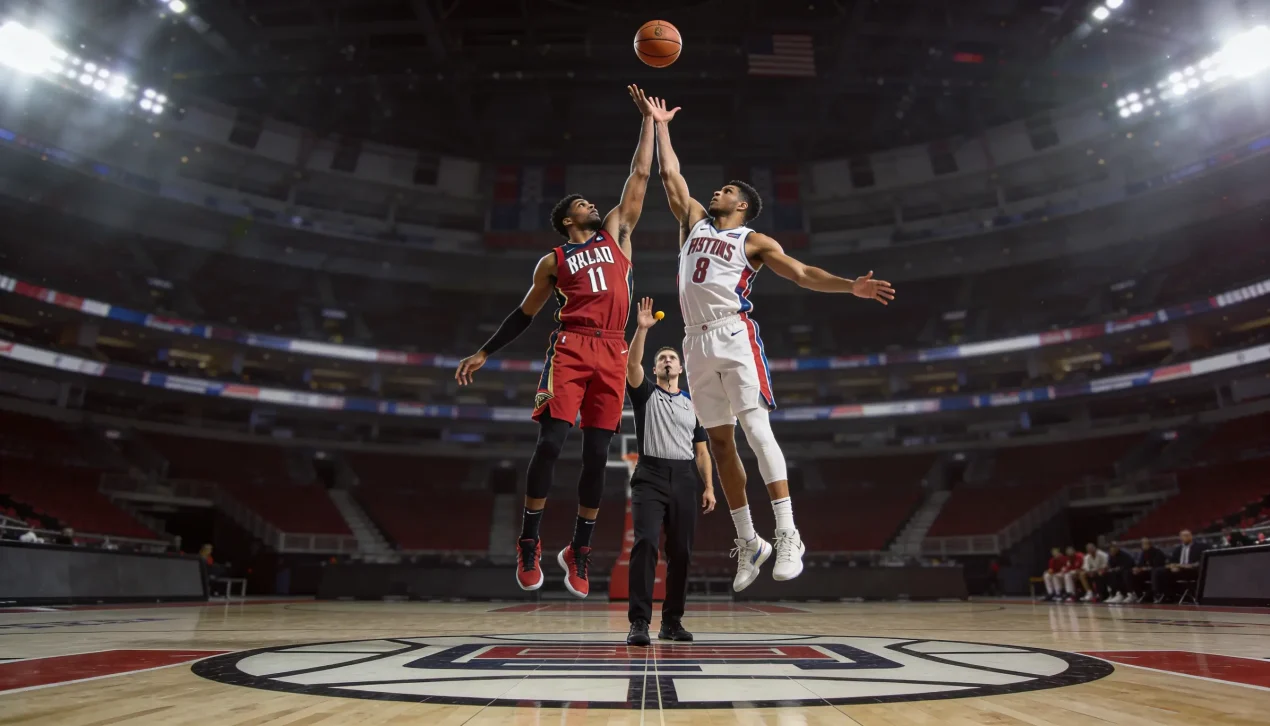
First Basket Scorer Pricing: Balancing Entertainment with High Sportsbook
I once won a first basket scorer bet at 11.00 on a backup centre who had never started a game that season. He was inserted into the lineup 30 minutes before tip-off due to a late injury scratch, won the opening tip, caught a lob on the first possession, and dunked it. Easiest money I have ever made — and the most unrepeatable. First basket scorer is the one NBA prop market where entertainment value and analytical value pull in opposite directions.
The margins on first scorer bets are enormous. While standard player props carry vig of 5-8%, first basket markets routinely embed 15-25% margin because the outcome is inherently low-probability and high-variance. Every player on the starting ten has a chance to score first, which means individual probabilities are small and the bookmaker can spread the overround across many selections without any single price looking obviously inflated.
That said, the market is not purely random. There are structural factors that tilt the probabilities in identifiable directions, and if you are going to play this market — and it is fun, I will not pretend otherwise — you should at least understand what those factors are before picking a name.
How First Basket Scorer Odds Are Set
Bookmakers price this market by estimating each starter’s probability of scoring the game’s first points, then building in their margin. The inputs are simpler than you might expect: historical first-scorer frequency, team’s opening possession tendencies, and the player’s role in the offence’s initial play call.
The most likely first scorers are typically the team’s primary scoring option — the player who gets the ball in the first set play after the opening tip. Guards and wings who operate in pick-and-roll or isolation actions off the first possession are usually priced at the shortest odds, somewhere between 5.00 and 7.00 depending on the matchup. Centres who can score off the opening tip — either through a tip-in or a quick post touch — are often priced slightly longer but carry a structural advantage I will get to in a moment.
Points props are the most popular NBA market, accounting for 35-40% of all player prop handle, but first basket is priced completely differently. Standard points props are binary over/under markets with two outcomes. First basket is a multi-runner market with 10 or more possible winners, which means the overround is distributed across many selections. Each individual price might look reasonable in isolation, but the sum of all implied probabilities can exceed 140-150%. That gap between 100% and the total implied probability is pure bookmaker profit.
Understanding this pricing structure is important because it sets expectations: this is a market where the house edge is structurally high, and no amount of research can reduce it to the 5-6% you might pay on a standard points or rebounds prop. You are paying for entertainment as much as for analytical edge.
Jump Ball, Opening Play Design, and Starting Lineup Data
The single most overlooked factor in first basket scoring is the opening tip. The team that wins the jump ball gets the first possession, and the first possession produces the first basket more often than not. That makes the starting centres relevant even if they are not the team’s primary scorer.
Tall, athletic centres with a clear jump-ball advantage — the ones who regularly tip the ball to a teammate in a predetermined direction — give their team the first crack at scoring. From there, it depends on what the team runs out of the opening tip. Some teams go straight to their star in a designed action. Others run a quick set that creates an easy look at the rim, which might mean a cutting wing or a rolling big man gets the first shot rather than the marquee name.
I track opening-possession tendencies for each team over a rolling 10-game window. It is unglamorous work — rewinding the first 30 seconds of game film — but it reveals patterns that the market does not fully price. One team might have their point guard initiate every opening possession, making the scoring options predictable. Another might alternate between a post touch and a wing isolation depending on the defensive alignment. These tendencies are not random, and they persist across games because coaches design their opening play to set a tone.
Starting lineup data is the other piece of the puzzle. Late scratches change the opening possession plan. If the usual first-option scorer is out and a replacement starter takes the floor, the replacement’s first-basket price is often too long because the bookmaker has not fully adjusted for the opening-play redesign. This is the scenario that led to my 11.00 winner on the backup centre — a late scratch that the market had not repriced by tip-off.
A Quick Checklist Before Picking Your First Scorer
After tracking this market for several seasons, I have distilled my pre-bet process into five questions. Not a model — this market does not lend itself to precise modelling — but a checklist that filters out the worst bets and occasionally highlights a value pick.
First: which team is likely to win the opening tip? Check the starting centres’ jump-ball records. The team with the tip gets first possession, and first possession converts to first basket roughly 55-60% of the time.
Second: what does that team run on their opening possession? If you have film or play-by-play data from recent games, look at who took the first shot in the last five to ten games. Coaches are creatures of habit with opening sets.
Third: is the usual first-option scorer playing tonight? Check the injury report within the hour before tip-off. A late scratch can create mispricing that lasts until the game starts.
Fourth: does the centre on the tipping team have a history of scoring off the opening tip himself? Some centres tip the ball to a teammate and then roll to the basket for a quick lob or put-back. If this has happened in three of the last ten games, the centre’s first-basket price at 9.00 or 10.00 might represent genuine value.
Fifth — and most importantly — is the price long enough to compensate for the market’s structural margin? If you estimate a player has a 15% chance of scoring first and the decimal odds imply a 10% probability, that is a substantial edge. If the odds imply a 14% probability, the edge is marginal and probably not worth the variance. In a market with this much randomness, I only bet when the gap between my estimate and the implied probability is wide enough to absorb the inevitable losing runs.
Entertainment with a Side of Analysis
I am not going to pretend that first basket scorer is a market where disciplined analysis consistently produces long-term profit. The variance is too high, the margin too wide, and the sample size on any individual trend too small to be statistically robust. But it is a market where a small amount of research — checking the tip-off matchup, reviewing opening-play tendencies, monitoring late lineup changes — can shift the odds modestly in your favour. And unlike most prop markets, the outcome is decided in the first 30 seconds of the game, which means the entertainment density per pound staked is unmatched.
Treat it as a fun-money market. Size your stakes accordingly — a fraction of what you would put on a standard points or rebounds prop. And if a backup centre at 11.00 happens to catch a lob on the first play, enjoy the moment. It will not happen twice.
Does the first basket have to be a field goal or do free throws count?
At most UK bookmakers, first basket scorer bets require a field goal — a two-point or three-point shot made during live play. Free throws scored before any field goal do not typically count. However, rules vary between operators, so check the specific market terms before placing your bet. Some bookmakers offer a separate ‘first points scorer’ market that includes free throws.
Why are first basket scorer odds so much higher than standard props?
Because the outcome has many possible winners and each individual player’s probability of scoring first is relatively low — typically 8-15% for the most likely candidates. Standard props are binary (over or under) with roughly 50-50 implied probabilities, which produces short odds near 1.90. First basket is a multi-runner market, so individual prices are naturally longer. The bookmaker also embeds a wider margin — often 15-25% total overround — across the field.
This material was created by the PROPSWISH team.
Related posts
NBA Prop Bets vs Moneyline and Spread: a Side-by-Side for UK Punters
NBA Race to X Props and Game-Level Propositions: Beyond Player Markets